
ETHER DRIFT

About ETHER DRIFT
Ether Drift is a Norwegian rock project based in Fetsund, created by musician and songwriter Lars Garpe‑Hallø. With a unique blend of melodic and energetic songs, Ether Drift crafts an exciting and dynamic soundscape that carries the listener through both raw power and delicate vulnerability.
More than just a band, Ether Drift is a deeply personal artistic expression – a concept where every note, lyric, and image is shaped by lived experience.
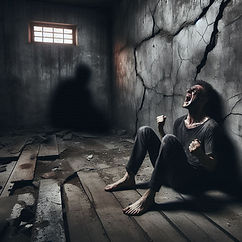
The album "Last Cry Before I Fade" is written as a reflection of an entire life lived with PTSD – long before understanding what it truly was. It tells a story of hidden struggles, resilience, loss, and the search for a way to reclaim control over one’s own narrative.
The album, "Veil of Valour", a concept work exploring Sixteen forgotten voices rise from the dust of time.
Across lands and legends, from battlefields to myth, their stories burn again – fierce, untamed, and immortal.
This is a symphonic metal odyssey where history and imagination merge, where every melody bears the weight of courage, and every chorus carries the spirit of those who refused to fade.
A tribute to the unseen, the unremembered, and the unbroken
Ether Drift invites listeners into this universe – a place between shadow and light, silence and sound – where music becomes a vessel for truth that cannot always be spoken aloud.

Dive into the dreams and stories of the soul behind Ether Drift.
A singular journey of sound and emotion, where every note carries a fragment of a life lived between shadows and light.
Keeper of the Fading Light
My Story
Music came into my life early – and never left. At the age of ten, I was sent to live with my aunt and uncle while my mother was undergoing chemotherapy. To keep me occupied, my uncle showed me four basic guitar chords, along with a simple rhythm and finger‑picking pattern. From that day on, I spent most of my youth practicing – over and over – until the fingertips of my left hand were as hard as stone.
A year later, I joined my first band, a cover group playing at local youth concerts. At fourteen, I got a small but memorable role in the Danish play Melodien som blev væk (“The Melody That Got Lost”) by Kjeld Abell. The production opened with me, as a wandering musician, performing the first verses of the play’s song Sangen om Larsen (“The Song of Larsen”) before leaving the stage while still playing. Toward the end, I returned to play the final verses. The experience of being part of a live theatre production lit a spark in me.
Two years later, I was cast in a stage production of Pink Floyd’s The Wall, where I played an “audience agitator” whose job was to get the real audience shouting and participating. Later in the show, I was dragged onto the stage by soldiers and “executed” in a dramatic scene. Sometimes, I also worked backstage or played the role of a soldier. During these years, I played in several different bands and landed a few small parts in Danish film and TV productions.
At eighteen, I met the musicians behind a Pink Floyd tribute band touring Denmark and Germany with The Wall. I was brought in as a stand‑in guitarist for their regular player, performing nine shows with them – an unforgettable experience. Not long after, I co‑founded a new band. This became Duality, which toured Denmark for many years with original material and even released an album on a record label.
While still performing with Duality, I got a job at a television station where I learned everything about camera work, framing, and editing – skills I would later carry into advertising, concert filming, and theatre production. After nearly a decade of living the musician’s life, I decided to step away from the road. I moved to Norway to start a new chapter.
In Norway, new opportunities opened up – this time in the film and TV industry. I landed roles in films such as Jakten på Berlusconi (2014 – a Norwegian crime comedy that was never given an official English title) and Epleslang (Thieves, 2015), as well as in the TV series Roeng (2018). I also worked as a stand‑in for the Norwegian comedian Kristian Valen on his sketch comedy TV show Kanal Valen. Valen often plays multiple characters in the same sketch, and of course, he can’t be in two places at once. When this happened, I would be dressed as one of his characters and perform opposite him. Then we would switch roles, and the scene would be filmed again. In one AC/DC parody sketch, they even used my hands for the guitar playing, cutting to his face in post‑production. This remains one of the most creative and enjoyable experiences I’ve had in the TV industry.
Eventually, music found its way back into my life. I was contacted by Danish author Patrick Lies, who had written the Nicrodemic book series, and he asked me to compose a title song for the novels. I wrote Castra Damnatorum, released under the name Duality By Prone. The song can be heard through links in the books, on Spotify, and in a music video on YouTube.
Since then, I have written music for commercials, TV series, and films, produced advertisements, and documented concerts and theatre productions. In the past year, I have also written material for a Norwegian revue – a new creative path I’ve come to truly enjoy.
Today, I continue to explore, create, and share – with Ether Drift as my newest chapter.


Inside the Process
Ether Drift is an experimental music project where composition, performance, sound design, and modern production tools are treated as one unified process.
All music is written and composed by the artist. The structure, lyrics, arrangement, and emotional direction of each track are fully defined before recording begins.
Production takes place inside a digital audio workstation (DAW), where all instrumental elements are programmed, recorded, and arranged manually. This includes drum programming using custom sample-based drum systems, as well as guitars, synths, and other instruments.
Vocals are recorded by the artist as the foundation of each track. From there, vocal processing becomes part of the creative design. Pitch correction tools are used where needed, not to replace performance, but to shape and refine expression.
In some tracks, vocal processing techniques are used to extend the vocal palette beyond a single fixed identity. This includes shifts in vocal character and gender-based timbral design. The purpose is not imitation, but to serve the internal ‘sound’ of the music as it is already composed in advance.
This approach is also connected to a core idea behind Ether Drift: perception shapes listening. When a listener believes they know the person behind a piece of music, expectations are formed before the first note is even heard. Those expectations can influence how the music is perceived, regardless of the music itself.
In music, perception matters.
For that reason, vocal identity is treated as part of the composition rather than a fixed personal signature. The voice can become a role, just like an instrument or a sound layer. A guitar can be processed into multiple textures – the voice is approached in the same way.
This is not about hiding identity, but about removing preconception so the music can be experienced on its own terms. The focus is not who performs the music, but what the music communicates when it is heard without assumptions.
For mixing and mastering, both manual processing and modern mastering assistance tools are used. These tools function as final-stage processing systems to ensure consistency across different listening environments, from studio monitors to headphones and mobile devices.
Occasionally, additional audio processing tools are used on individual instruments (such as guitar tone shaping), where the goal is to improve sonic quality without altering musical content.
In Ether Drift, every sound is part of the composition. The voice is not treated as a fixed recording of identity, but as one of many designed elements within the music.
Every piece begins with human intention. Modern production technology does not replace authorship; it extends the range of tools through which that authorship can be expressed.
Ether Drift explores what happens when music is not only written and performed, but also shaped through the interaction between human creativity and modern production technology.


